
1. Screening for and raising awareness of Adverse Childhood Experiences (ACEs) and trauma to foster healing;
2. Promoting health education and literacy through food insecurity alleviation, nutritional counseling, and food as medicine initiatives;
3. Preventing cardiovascular and other chronic diseases through early intervention and healthy lifestyle support;
4. Addressing suicide, substance use, and overdose through education, community-engaged research, and harm reduction strategies; and
5. Combating maternal morbidity and mortality by improving access to quality, culturally-responsive care.
The Essie B. & William Earl Glenn Foundation for Better Living (“GFF”) is uniquely poised to offer direct services, conduct community-engaged research, and provide technical assistance in each of these areas.


In 2019, GFF founded the ACEs Awareness Foundation of Mississippi to educate the community at large about the impacts of unmitigated trauma and long-term, adverse implications for individual and community health outcomes. Since 2020, GFF, in partnership with the ACEs Awareness Foundation, has hosted an annual Adverse Childhood Experiences (ACEs) & Trauma Awareness Symposium, bringing together providers in healthcare and public health, community stakeholders, and thought partners in education, government, law enforcement, and a variety of other sectors to collectively receive education, workforce development training, and leadership
development opportunities to build capacity for devising and implementing effective strategies.
With investment from W.K. Kellogg Foundation, GFF 1) increased awareness of the prevalence of two-gen ACEs; 2) used the findings from ACEs surveying to inform and implement community-based interventions to combat the pathology which untreated ACEs can evince; 3) engaged students, teachers, and families in systematic one-to-one goal-setting in emotional health and wellness to mitigate life-long consequences of ACEs; and 4) measured key family outcomes in child/parent engagement, including frequency of engagement with outreach counselors and other health professionals to support lowered stress levels, as measured by weekly blood pressure readings and lower CHAOS scores, and higher levels of student engagement in school and in building healthy networks external to the school.
The GFF ACEs survey research of 728 adults in the Sunflower / Bolivar County areas shows that forty-one percent (41%) reported having experienced one to two ACEs, twenty-seven percent (27%) reported three to four, and 28 % reported as many as five or more. As originally conceived in the seminal ACEs study, adverse childhood experiences were distributed among 10 domains: (1) emotional abuse, (2) physical abuse, (3) sexual abuse, (4) emotional neglect, (5) physical neglect, (6) mother treated violently, (7) household substance abuse, (8) household mental illness, (9) parental separation or divorce, and (10) incarcerated household member. On average, adults in the Southern town most frequently cited parental divorce or separation (48%), not
having felt supported or loved (36%) and incidence of family mental illness (37%). Findings from this investigation have been presented among diverse audiences of researchers, behavioral health specialists, and practitioners and have both generated dialogue and motivated action to devise trauma-informed interventions of best fit for impoverished communities in rural locales. White paper, “Sustainable Health and Healing in Southern Towns” was developed as a knowledge product for the WK Kellogg Foundation is pending public release.

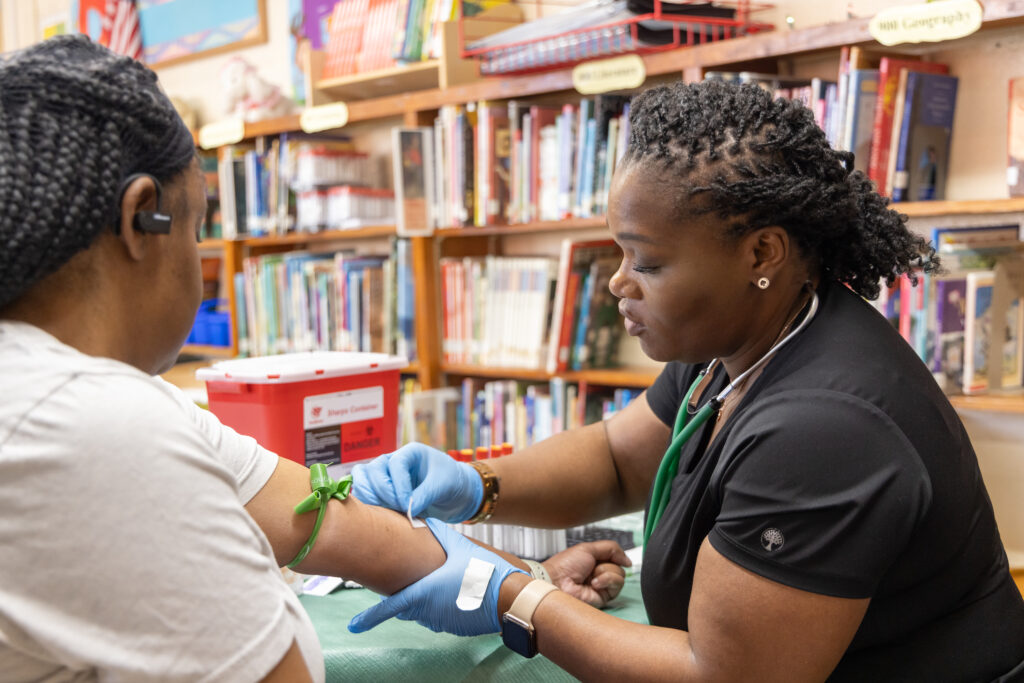
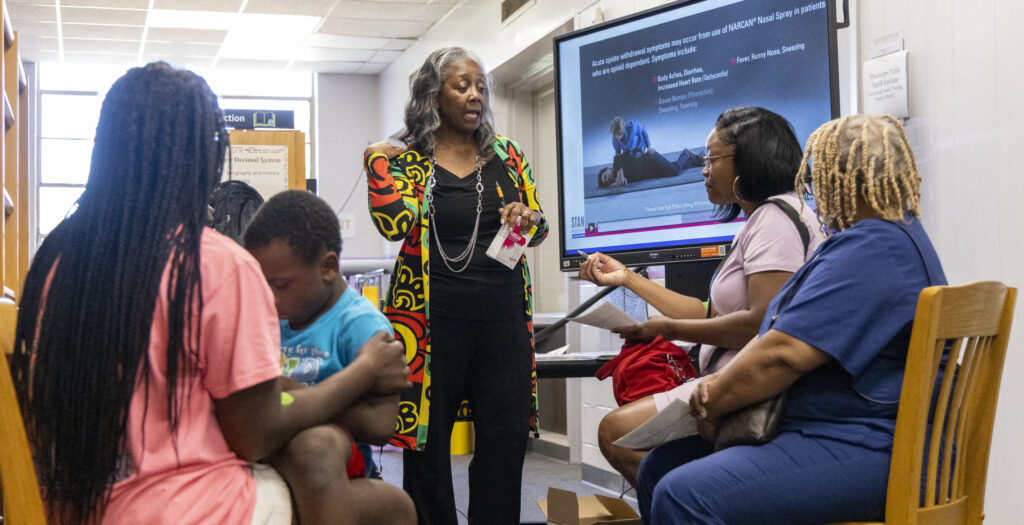
The I-HEAL program is a trauma-informed, intergenerational health intervention that brings health literacy education, free immunizations and health screenings, nutritious food distribution, and care navigation services into schools and community-accessible spaces. Workshops and health events empower participants to set SMART health goals, improve healthy practices, access referrals, and adopt lifestyle changes that reduce stress and risk of diabetes, hypertension, oral disease, and other chronic conditions. The long-term impact of the I-HEAL program is to strengthen community health and resilience in rural Mississippi. I-HEAL aims to shift long-term health trajectories for children, adults, and families—addressing not only individual health
outcomes but also factors that contribute to poor health. GFF built upon a one-year pilot year in which the I-HEAL curriculum was developed; tested in Sunflower County, MS; and translated for delivery via a virtual learning management system. The curriculum is being expanded into a multi-prong initiative to include “Food as Medicine” and nutrition counseling for participants.
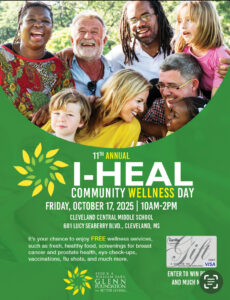
FRIDAY, OCTOBER 17, 2025
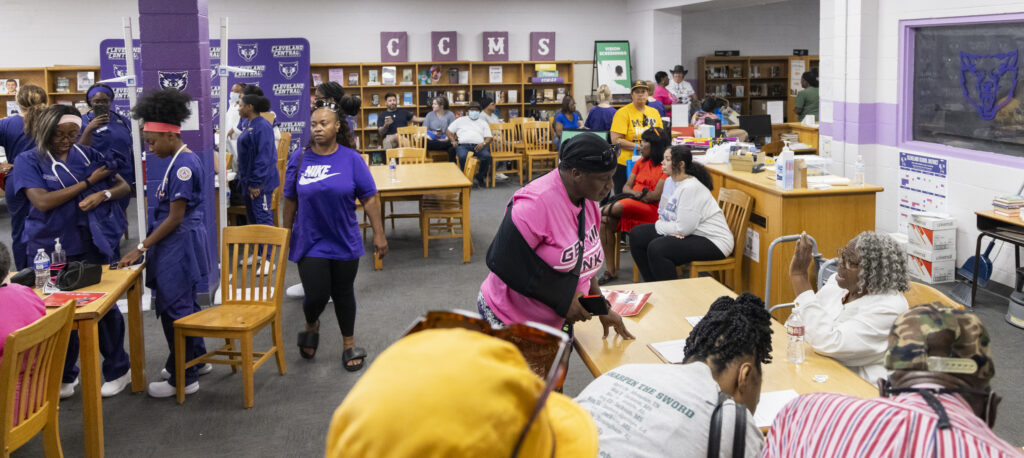
For the past 11 years, GFF has held its annual I-HEAL Community Wellness Day (formerly Community Health & Safety Tailgate) at Cleveland Central Middle School located in Cleveland, MS in the Mississippi Delta. The Wellness Day event is structured as a drive-through health fair, free of cost and open to the public, with a wide array of services including comprehensive metabolic wellness panels to assess hypertension and kidney function and screenings for breast cancer, vision, diabetes, and other health related services. Attendees learn about and receive referrals for community wellness services and clinical/therapeutic services available to youth and adults in the area. This event has increased in scale, serving 400+ unique individuals annually, with attendees arriving solo or with groups of family and/or neighbors.
With Project YES funding support from the Bolivar Medical Foundation, GFF implemented “Afterschool Enrichment, Snack, & Improving Student Life Choices,” a multi-prong initiative combining a healthy eating and physical activity series and edible landscape development (community gardening). Additional enrichments included tutoring assistance with math, English, and computer skills as well as hands-only CPR. This initiative was implemented in collaboration with Margaret Green Junior High School of the Cleveland School District (implementation site), Mississippi Food Network (provision of healthy food/snacks), and Delta State University School of Education – Department of Nutrition & Dietetics (implementation of the Coordinated
Approach to Child Health (CATCH) workshop series).
GFF implemented the community- and evidence-based Becoming a Responsible Teen (BART) intervention to students of Eastside High School in Cleveland, MS. Participants learn how to reduce risky sexual behaviors with communication and prevention skills appropriate for adolescents. Through group discussions, role playing, demonstrations, culturally-appropriate videos, participants learn essential information about ways to handle social and sexual pressures.


In our Pfizer, Inc. funded “Accessing Breakthroughs” project, GFF examines the quality and access of healthcare and their correlates, from the perspectives of impoverished families (children and parents/guardians) of Bolivar, Coahoma, and Sunflower counties of Mississippi. The project builds a modest but powerful research foundation for the thoughtful transformation of rural healthcare systems and community outcomes. GFF investigates how adults’ and children’s access to and interactions with oral, physical, and mental healthcare providers and access to nutritious foods predict their health status. GFF posits that ideas of deservedness and (un)deservedness form early in patients’ and practitioners’ mindsets, but early exposure to effective healthcare at scale and effective resource allocation can shift that orientation in patients and practitioners. Goals:

GFF was engaged by the MS Department for Mental Health to support the 988 Suicide & Crisis Lifeline to conduct qualitative research with service providers and community members to 1) understand facilitators and barriers to community members accessing available crisis resources in the state, 2) understand what services and supports are needed but are unavailable or inaccessible, and 3) solicit recommendations for increasing utilization of crisis resources in MS, including the 988 hotline. The
scope of GFF’s work was to:
Mississippi is one of 15 states that received a $1 million Certified Community Behavioral Health Clinic (CCBHC) planning grant that aims to transform mental health and substance use treatment across the country by providing sustainable funding for robust community treatment services. In partnership with the MS Department of Mental Health and Region 6 Life Help, the Glenn Family foundation received a sub-award to:

Addressing maternal morbidity and mortality has become GFF’s newest programmatic pillar, reflecting our deepened commitment to advancing improvements to maternal morbidity and mortality in Mississippi. Through the launch of a supplemental maternal health module within the I-HEAL intervention, we will expand our reach to include comprehensive support for women during pregnancy and postpartum. GFF also has capacity to conduct screenings for Perinatal Mood and Anxiety Disorders (PMADs), ensuring timely identification and referral for treatment. GFF has also developed a strategic plan for creating a culturally-tailored maternal vaccination education and awareness campaign to promote informed, preventive care. Together, these strategies aim to reduce preventable maternal complications, increase community trust in maternal health services, and improve outcomes for mothers and their families.
Essie B. & William Earl Glenn Family Foundation © All rights reserved 2015 – 2025